
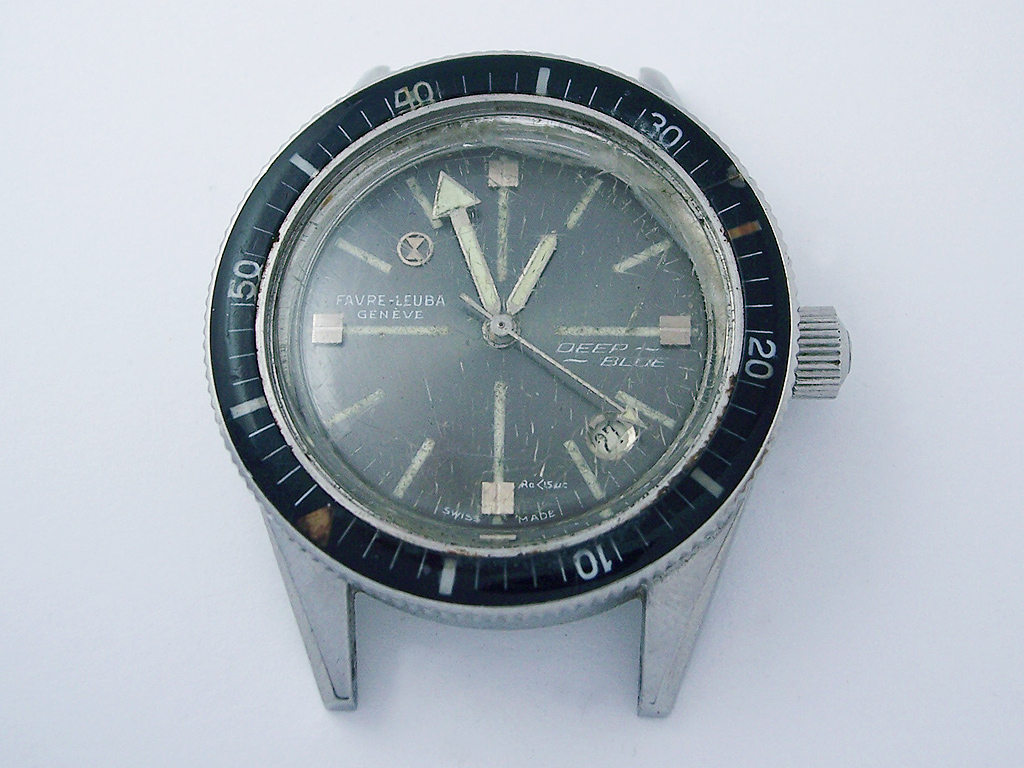
It’s been almost eight years since I wrote about a Favre-Leuba on the blog, so let’s have a look at this Deep Blue diver.
(Click pictures to enlarge)
Favre-Leuba have one of the longest histories in watchmaking, dating back to 1737. The brand was originally founded by Abraham Favre in Le Locle, Switzerland and officially became Favre-Leuba in 1815, when Abraham’s grandson, Henry-Augustus Favre, partnered with Auguste Leuba. The company expanded rapidly across Europe, the Americas and Asia during the 1850’s and establishing a manufacturing base in India in 1865, the first Swiss watchmaking company to do so.
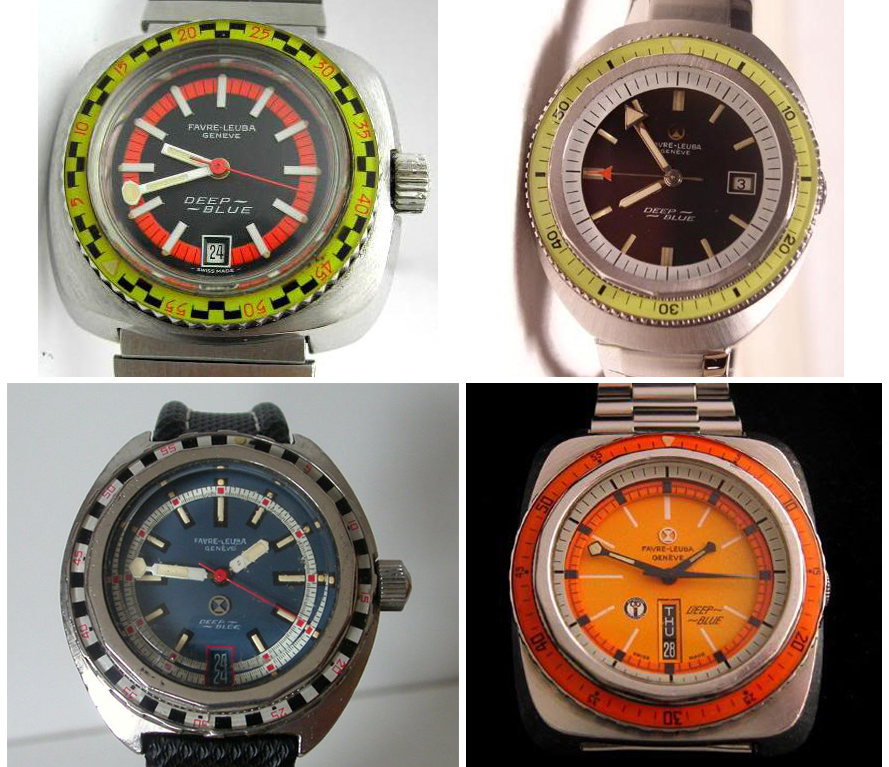
Fast-forward to the 1960’s and the company hit a rich seam of models which are popular with watch collectors today, among them the “Sea-Raider” (an example on the blog here), the “Bivouac” which included an altimeter, and the “Bathy” diver featuring a built-in depth meter. The Deep Blue range of diver’s watches were also produced in the same period, the model in this post being first released in 1964.
It’s safe to say that this model (ref. 59063) was one of the more sober models in the range, as some of the others would have been tougher to look at if you found yourself with a hangover…
Like many others, the brand suffered during the quartz crisis of the 1980’s, leaving family ownership completely in 1985. The brand passed through the hands of several larger companies including Benedom SA and LVMH (Louis Vuitton-Moët-Hennessy), before landing in the Spanish ownership of Valentin SA in 2003. Under the stewardship of CEO Clément Brunet-Moret, Valentin SA finally returned Favre-Leuba to the shelves in 2007, releasing three all-new models in The Mercury Line.
The brand changed hands again in 2011, joining the Titan Group (the watchmaking arm of the Indian conglomerate, the Tata Group) before returning to Swiss ownership once more in 2023 into the portfolio of the current owners, Silvercity Brands… Phew! Still with me?
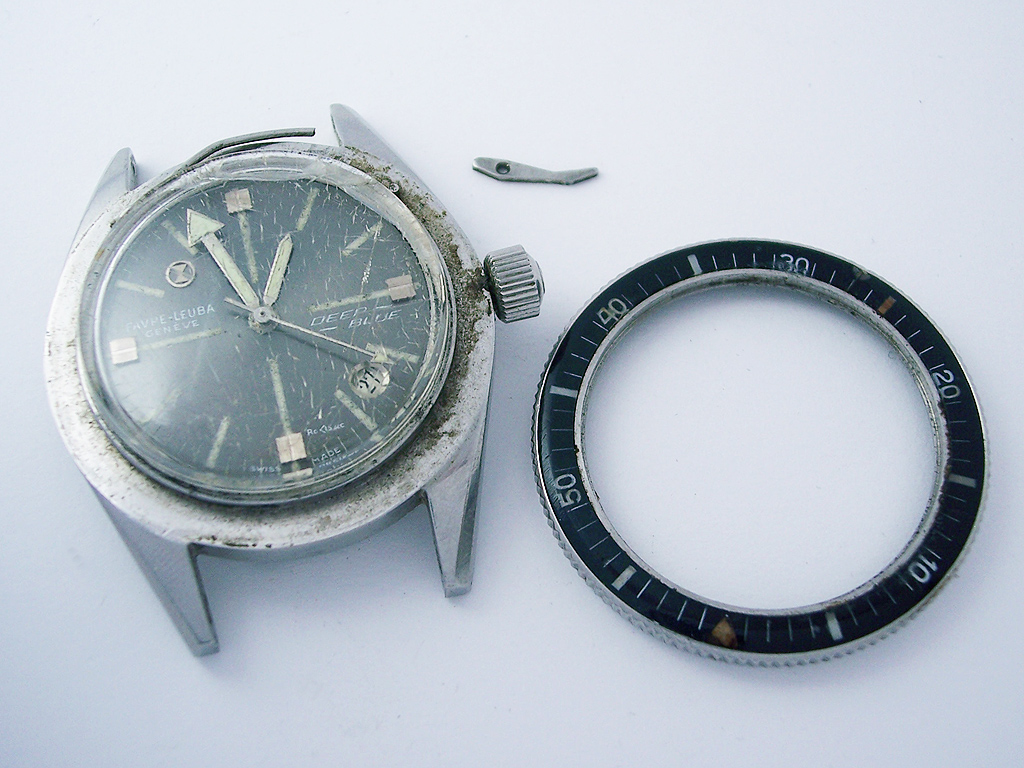
Getting back to the watch in question, it’s safe to say that it didn’t arrive in the best of health as the bezel parts were included loose with the watch, and the crystal could be lifted out by hand.
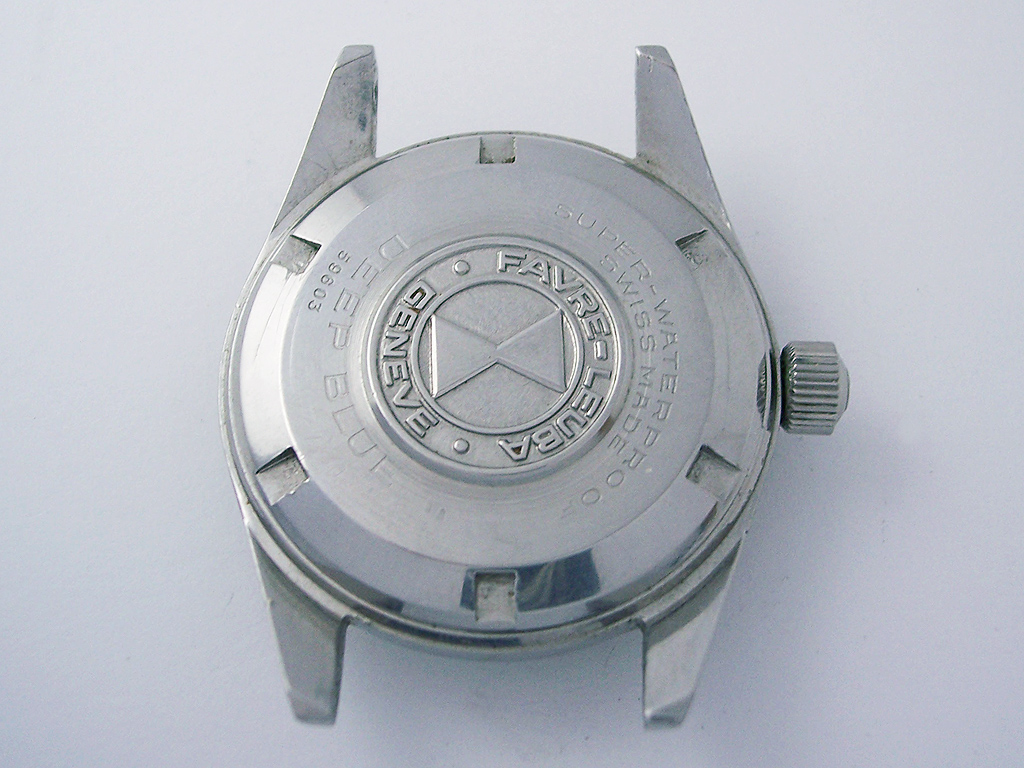
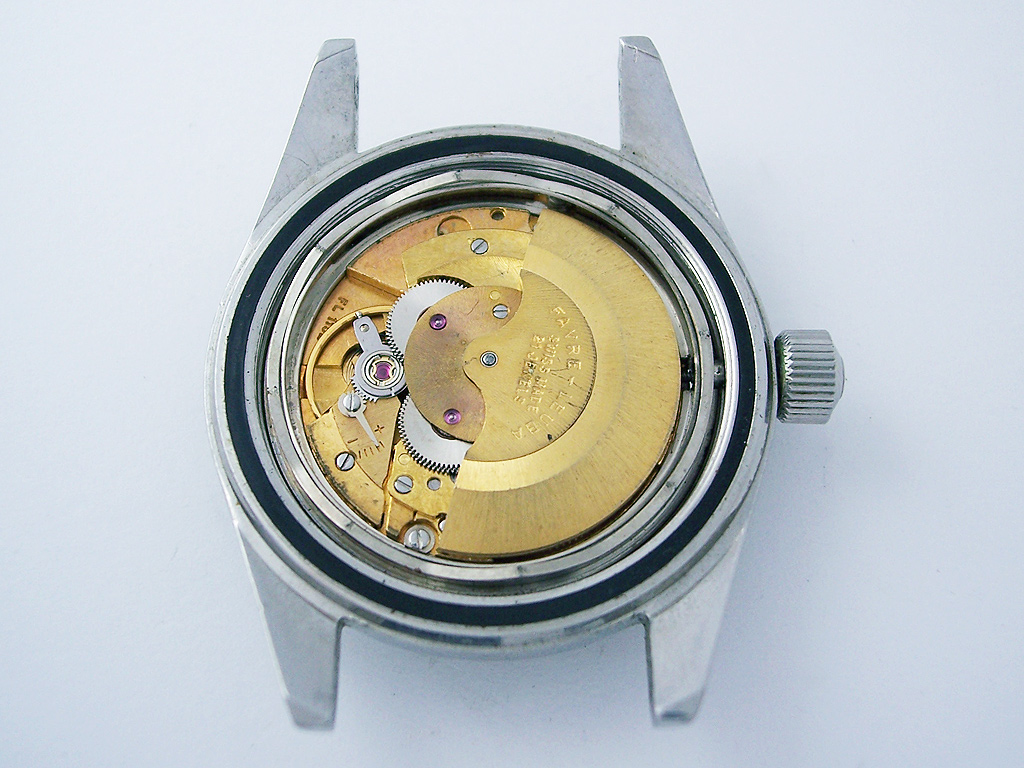
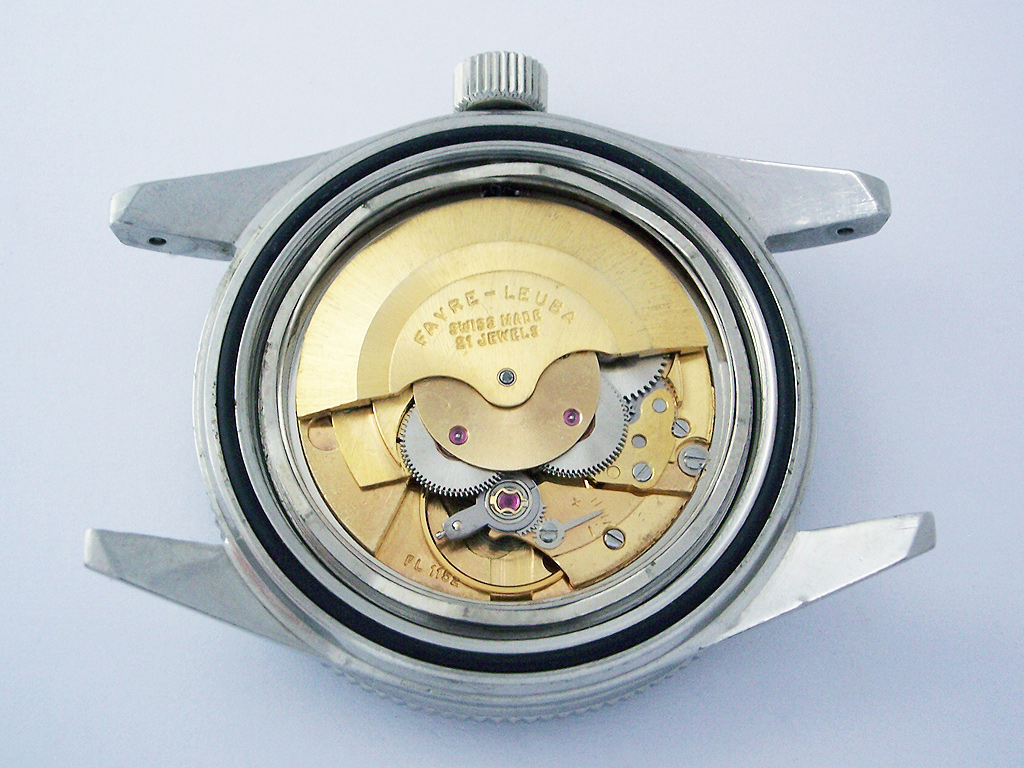
Turning the watch over, you’re treated to a pretty caseback bearing the Favre-Leuba hourglass…
… and inside, the movement is a Favre-Leuba cal. 1152; a 21 jewel, automatic movement with a beat rate of 21,600 bph and a date function with a limited quickset. Although it hadn’t been serviced in many years, the movement was at least complete and would tick with some encouragement.
Out of the case, things weren’t looking too bad as, despite the damaged crystal, the dial and hands were still in good, all original condition.
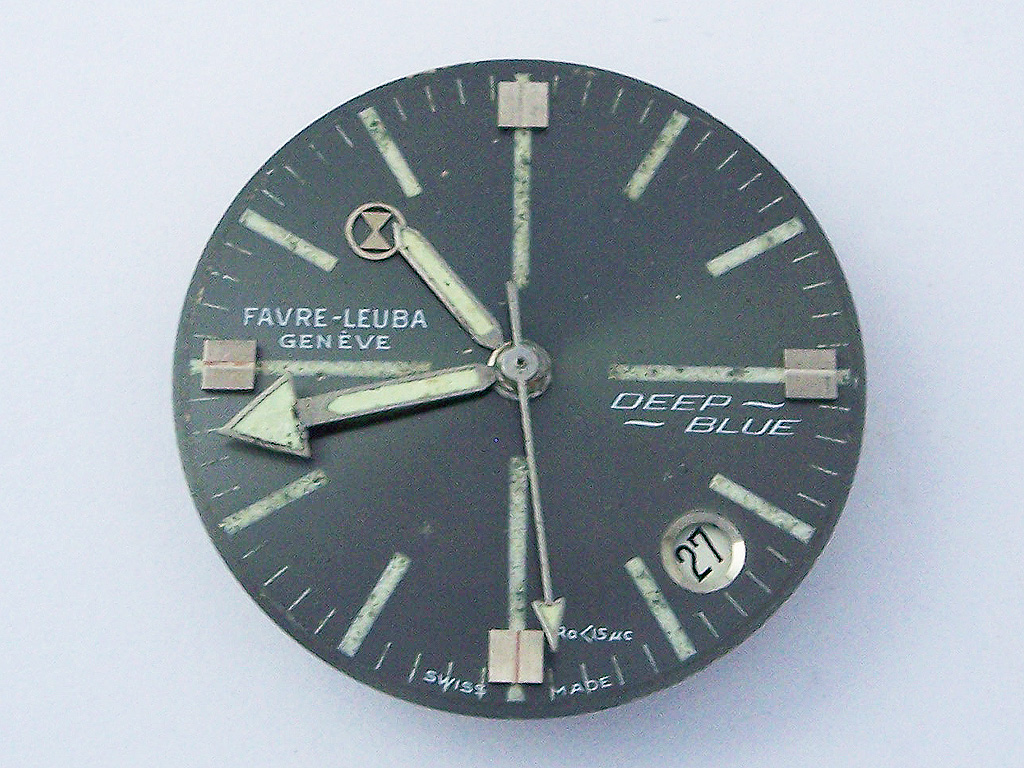
The movement servicing was relatively straight forward, only needing a new winding pinion as the original was missing a few teeth. The crystal however turned out to be the real challenge of this project, as genuine crystals for this watch were discontinued decades ago.
I was aware of this before taking this project on and my original intention was to simply replace the crystal with a standard diver’s thick crystal as a work-around, but I quickly realised that wouldn’t be possible.
What I didn’t know is that the crystal for this watch also secures the bezel, the side profile being ‘stepped’ to protrude over a lip on the inside of the bezel, keeping it in place.
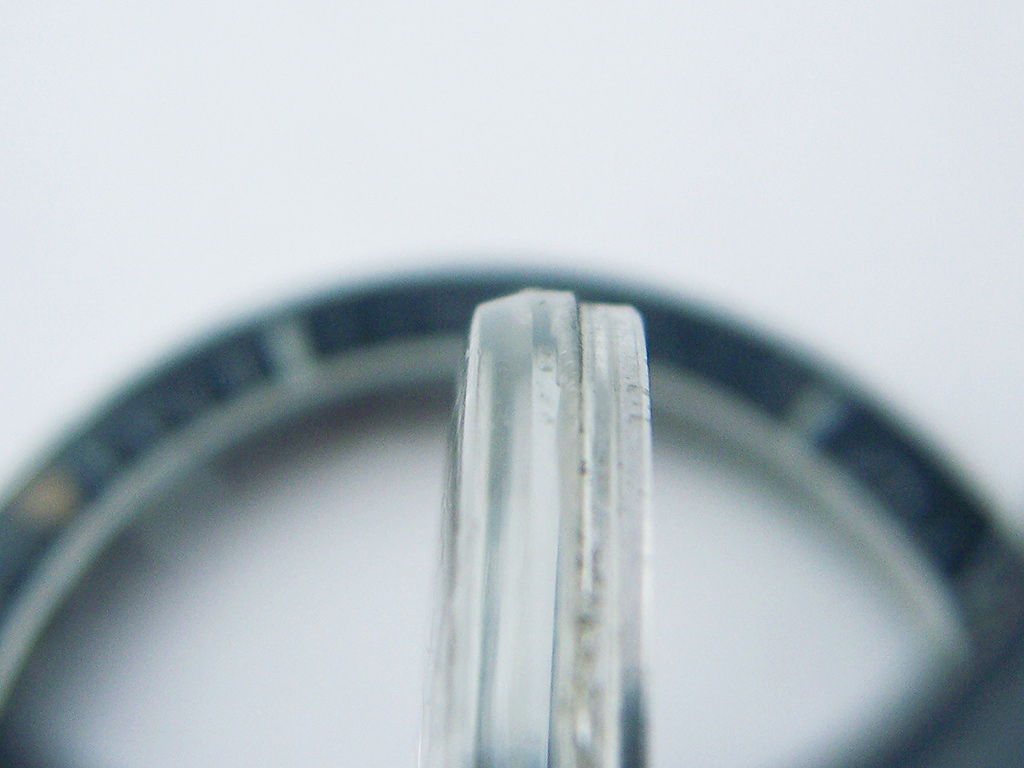
Thankfully, I wasn’t the first to encounter this problem and thanks to a tip from user ‘bristnj’ on the Omega Forum (more details here, thanks Jeff!) I had another option in the form of a GS crystal made for the Bulova Oceanographer, though it would need to be modified to fit.
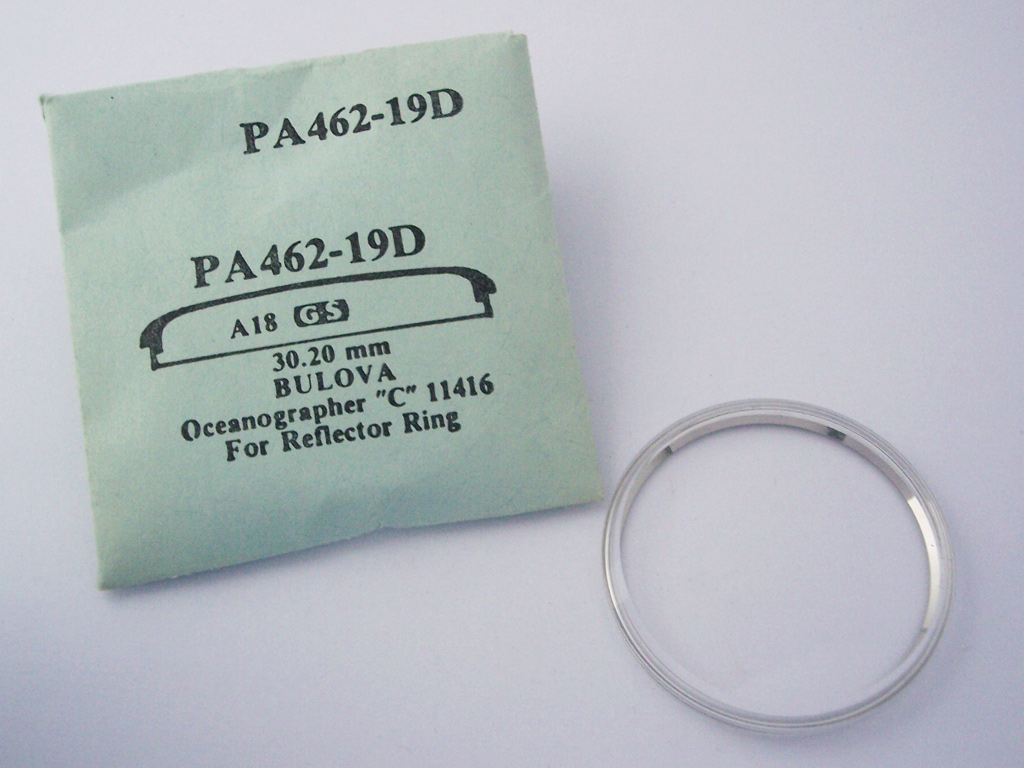
Unfortunately, GS crystals aren’t readily available in the UK, so the only option was to buy one from the US. When it arrived, I made the necessary modifications, hoping to just press it into the case and finish the job, but sadly, it wasn’t as straightforward as that… is it ever with vintage watches?
When pressed into the case, I found that the depth of the step on the GS crystal wasn’t deep enough and the crystal immobilised the bezel. Moreover, I soon realised that the fit had to be exact as the amount of friction on the bezel lip was crucial, too much and the bezel action would be stiff, too little and the bezel would spin freely.
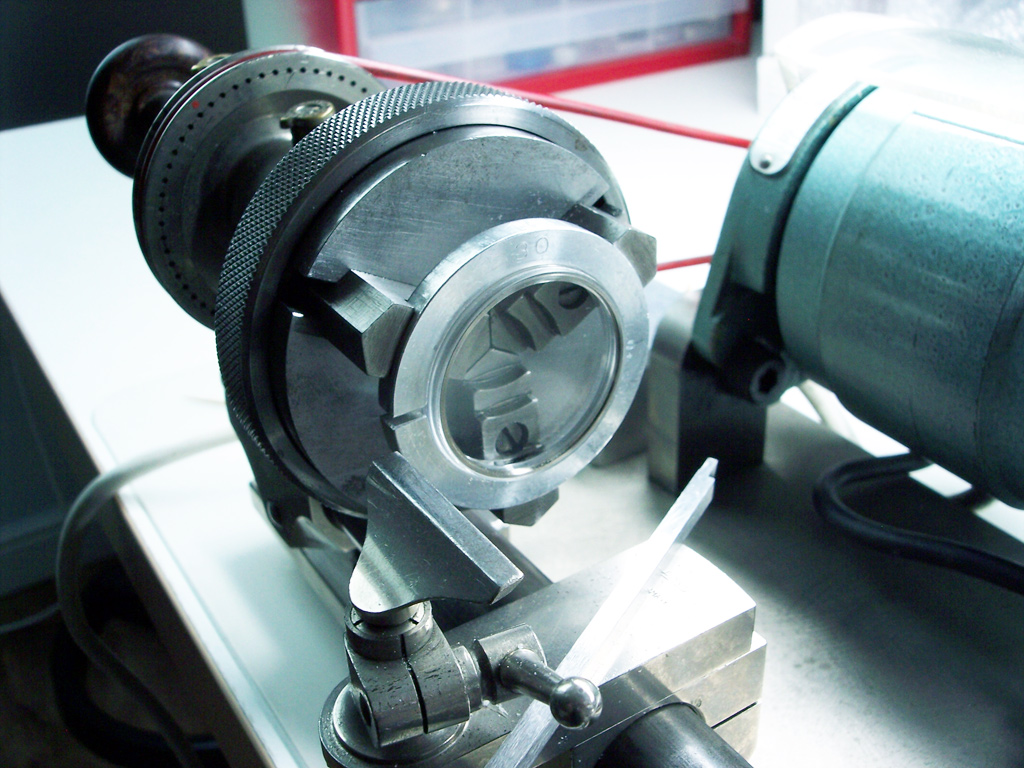
What ensued was a giant faff-fest, pressing the crystal in and out of the case several times, shaving off a tiny amount of material each time until the fit was just right. A delicate operation as one slip with the graver, removing too much material, and I’d need to order another crystal from the US and start all over again.
While the case is apart, it’s also worth looking at the click system for the bezel, which is simple but effective.
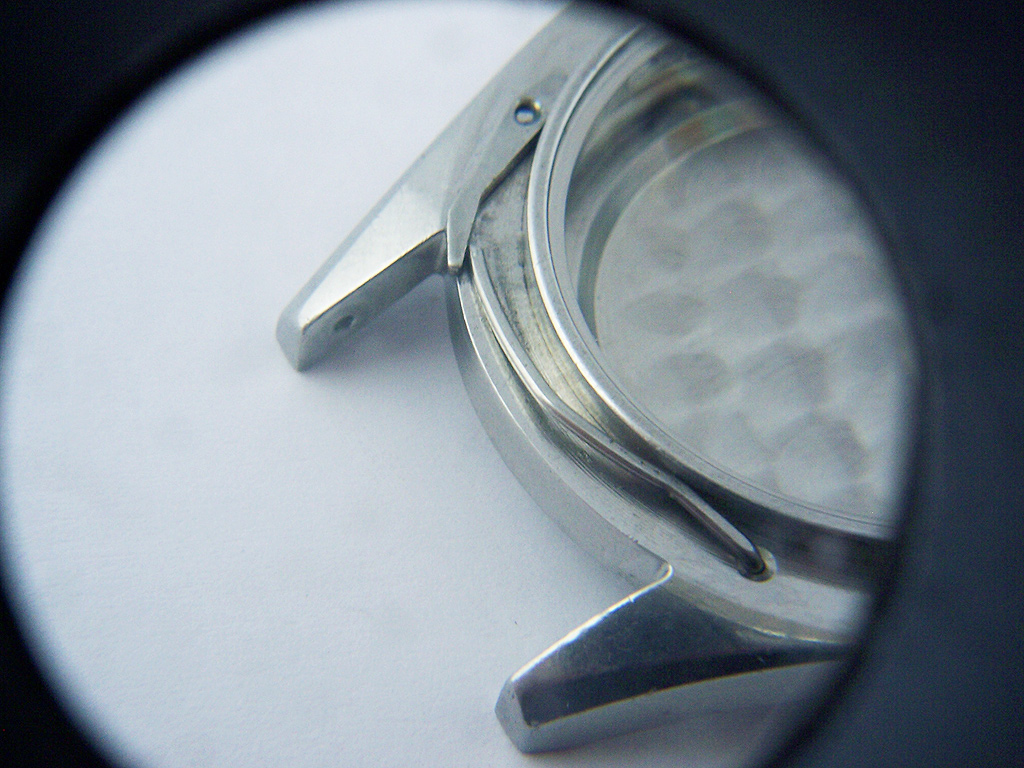
As the bezel is secured by the crystal, there is no need for any retaining wires or lips, the click is provided by a substantial spring which simply forces the arm outwards and into the teeth on the underside of the bezel.
With the movement serviced, the case and bracelet cleaned and the crystal problem finally resolved, I could rebuild the watch with a new caseback gasket to finish the job. The watch still has its original NSA bracelet, which is always a bonus.
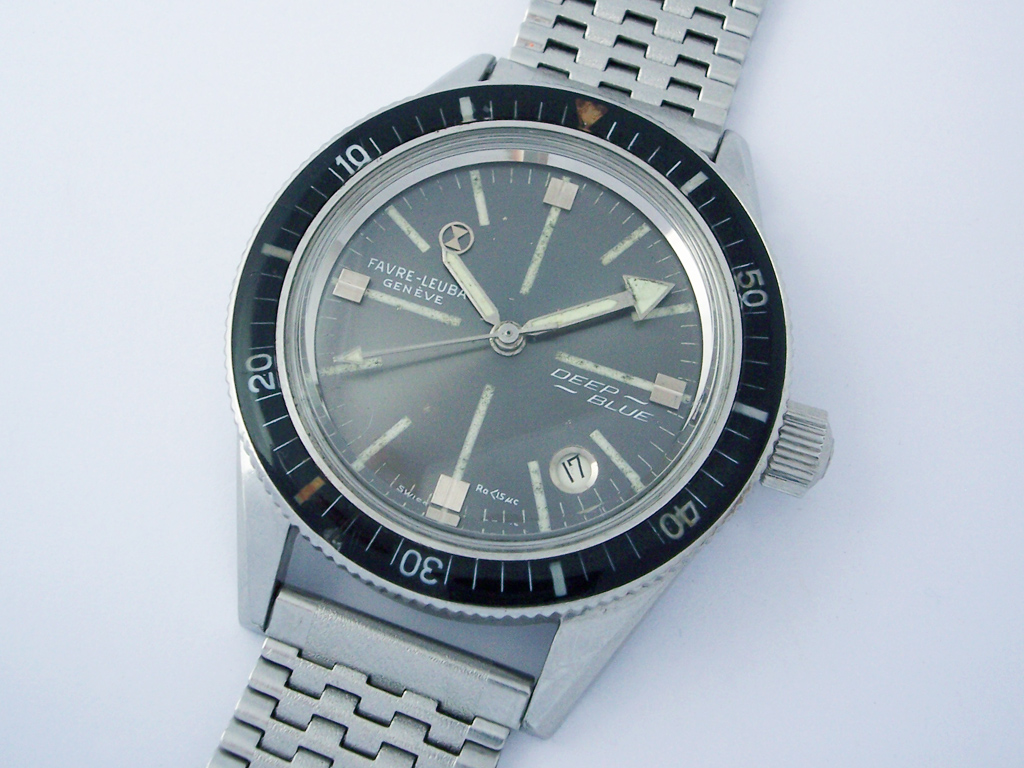
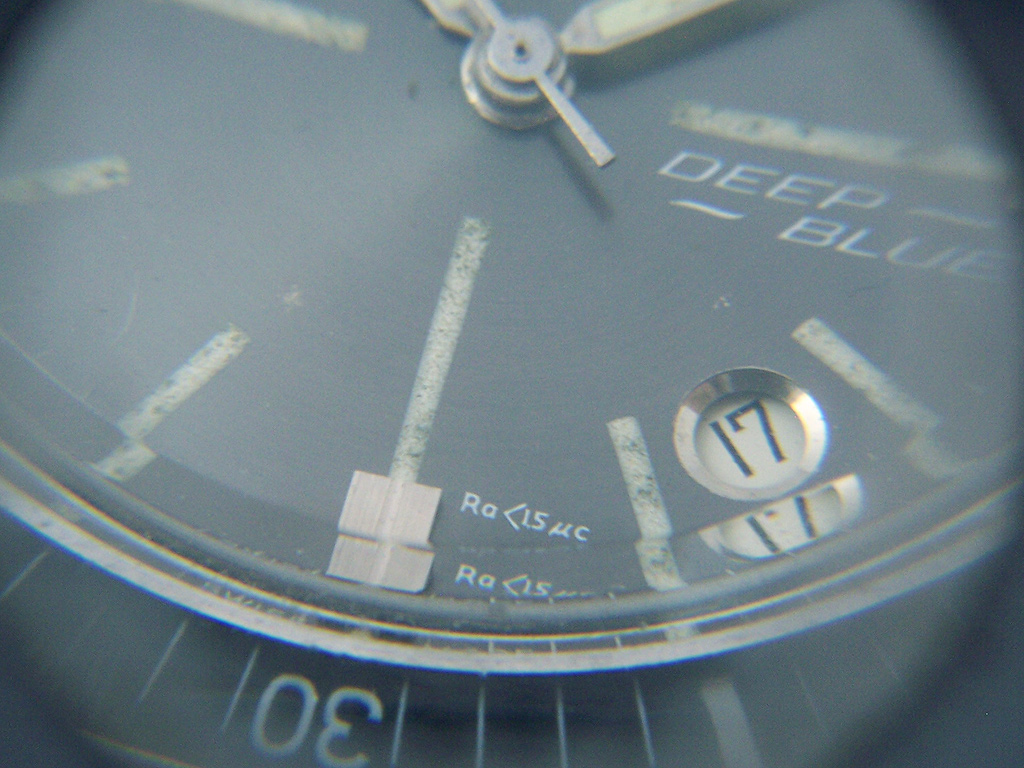
Finally, if you’re wondering what the curious scale is in the lower right quadrant of the dial, it’s the radioactivity of the lume, measured in micro-curies.
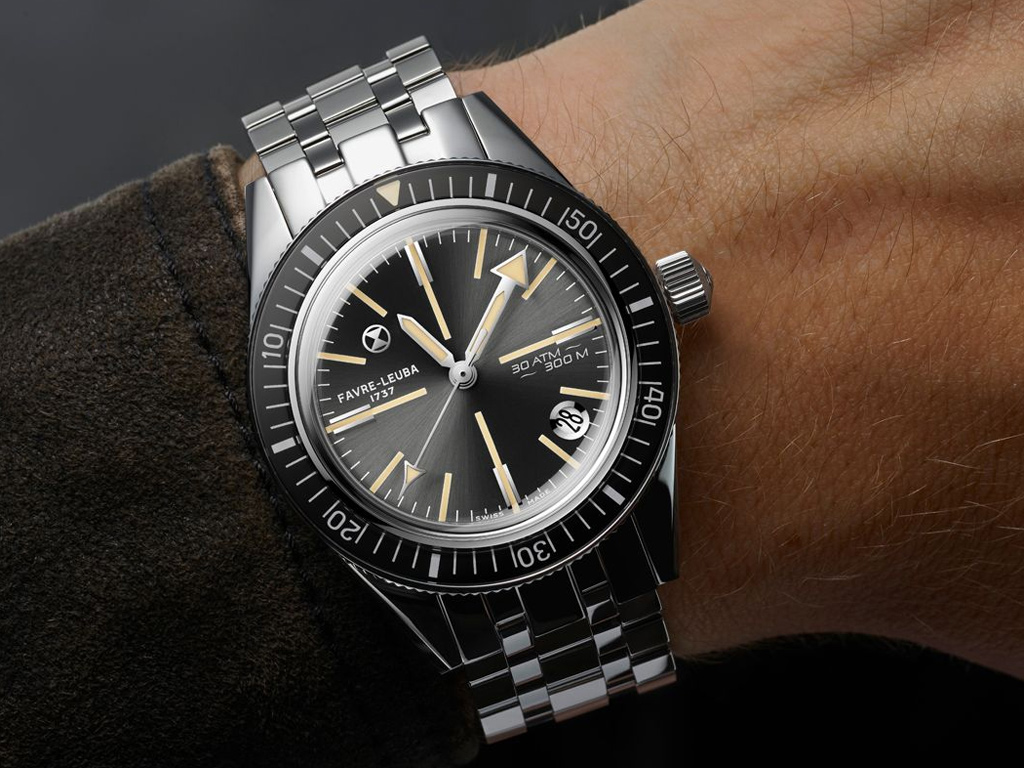
If you like this watch but have trouble finding one, then you may be interested to know that Favre-Leuba released a modern version of this model in 2024, which is pretty faithful the original. More details here.
Rich.
** Many thanks to Robbie McDonald for letting me feature his watch on the blog. **
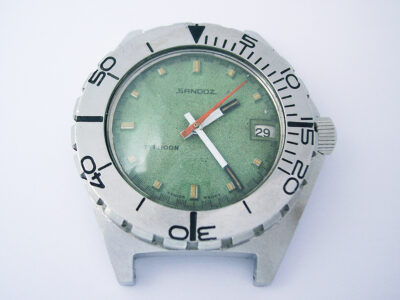
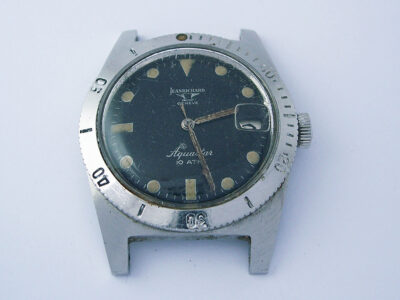
Hello, I also was given this watch to me from my dad, but mine does not have the Radium radioactivity scale.
The last one you wrote about (my dad’s) is still doing fine 8 years later thanks.
Nigel
Rich – I’m glad the GS crystal mod worked out for you and Robbie. Amazing work (as always) on bring this FL back. Such great pieces! Always enjoy your blog posts! Jeff