
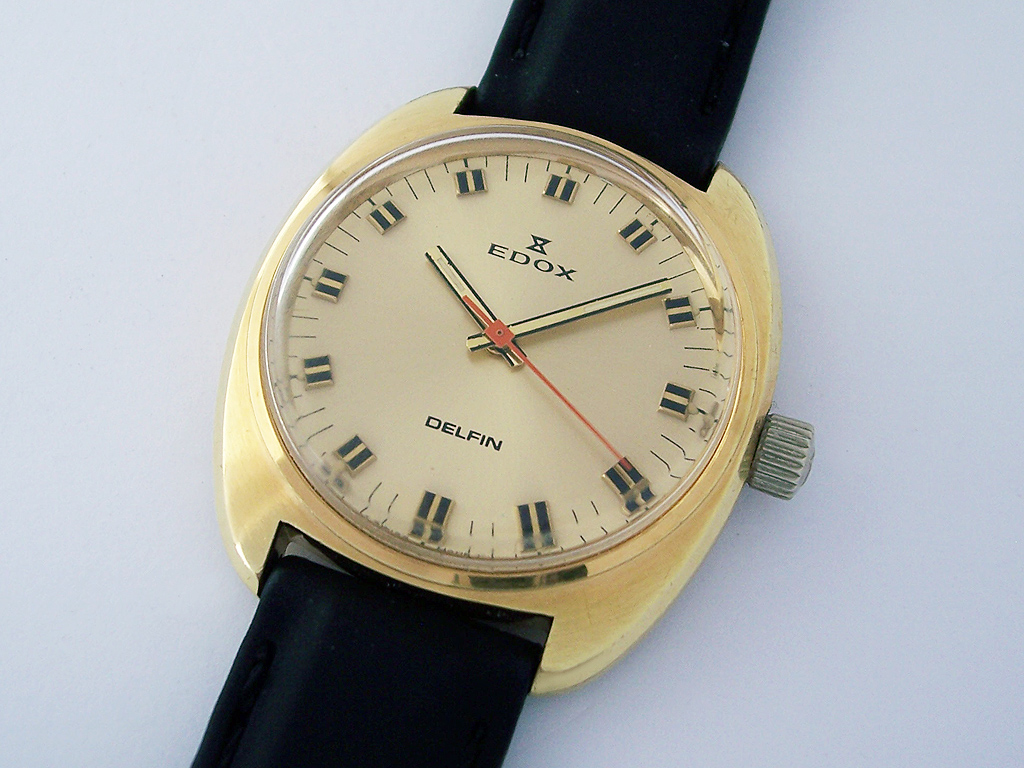
It’s always good to write about a new brand on the blog, so let’s have a look at this Delfin model from Edox.
(Click pictures to enlarge)

Founded in Biel, Switzerland by Christian Ruefli-Flury, Edox is named after the Greek for “measuring of time”. After producing a pocket watch as a surprise for his wife, Pauline, Ruefli-Flury started his own watchmaking business in 1884.
Adopting the hourglass logo for which Edox are known in 1900, company control passed to Robert Kaufmann-Hug when Christian Ruefli-Flury’s died in 1921. The company continued to thrive under Kaufmann-Hug’s leadership, moving to larger premises in 1950, accommodating around 500 employees at their peak.
Like many other brands, Edox stumbled during the quartz crisis and was put up for sale in 1983 by its then owner, ASUAG (which later became the Swatch Group). Victor Strambini bought the company, returning it to single-family ownership and relocated the business from Biel to Les Genevez in the Jura mountains, where they still operate today.
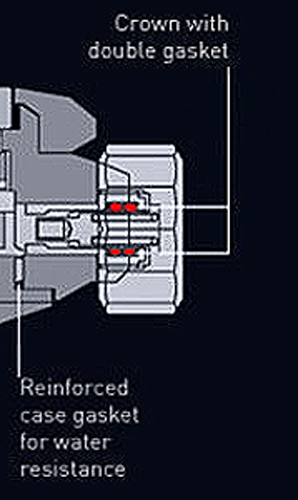
Looking back a few decades, a significant milestone in Edox’s history was the release of their first Delfin model in 1961, which incorporated a double o-ring gasket in the crown for increased water resistance – a feature still used in their watches today.
The origin of the Delfin name is not clear from my limited research, though it does mean ‘dolphin’ in German, one of the languages spoken in Biel, Switzerland – it also has the same meaning in a range of other languages including Spanish, Swedish, Danish and several of the Slavic languages.
The Delfin models were advertised widely at the time with the moniker, “The Water Champion”, to specifically highlight their water resistance credentials.
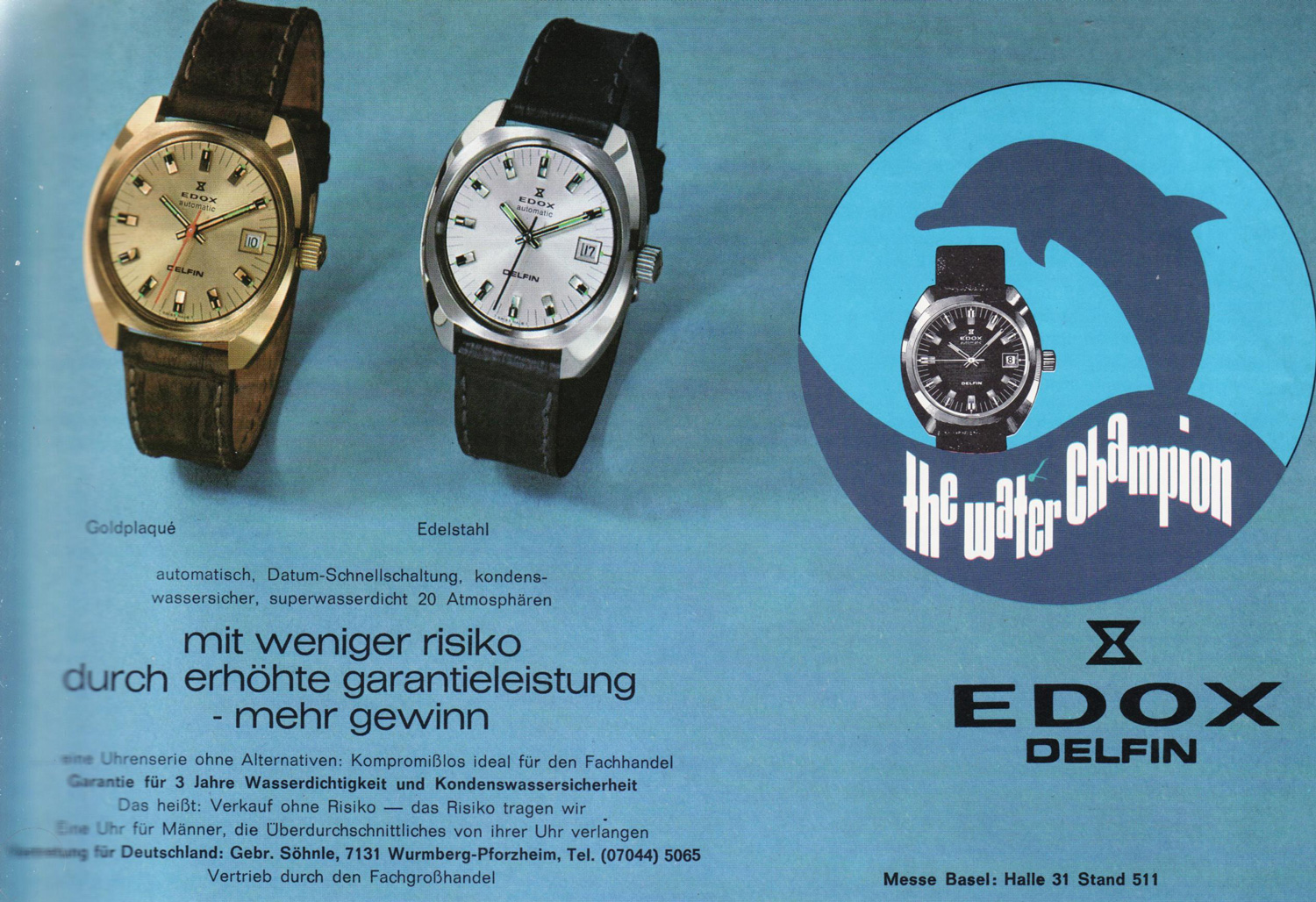
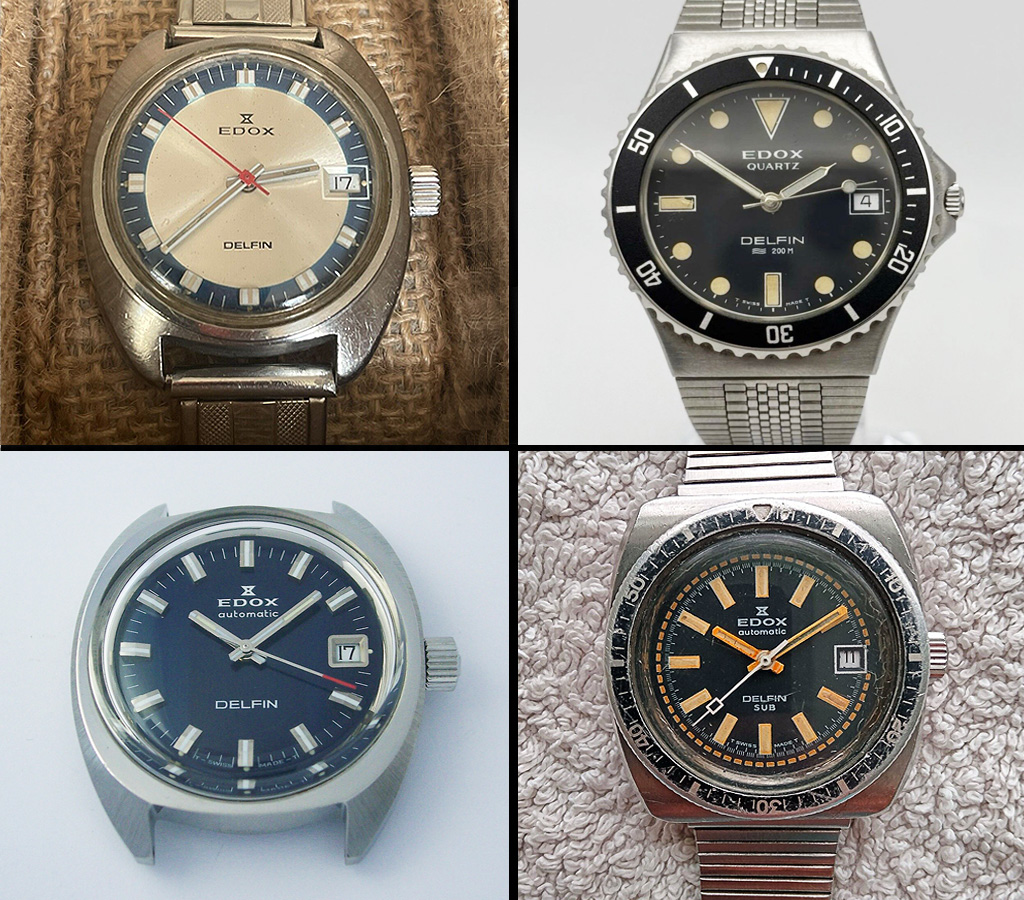
The model remained a cornerstone of the brand’s range into the 1980’s, the range expanding to include, manual, automatic and quartz models.
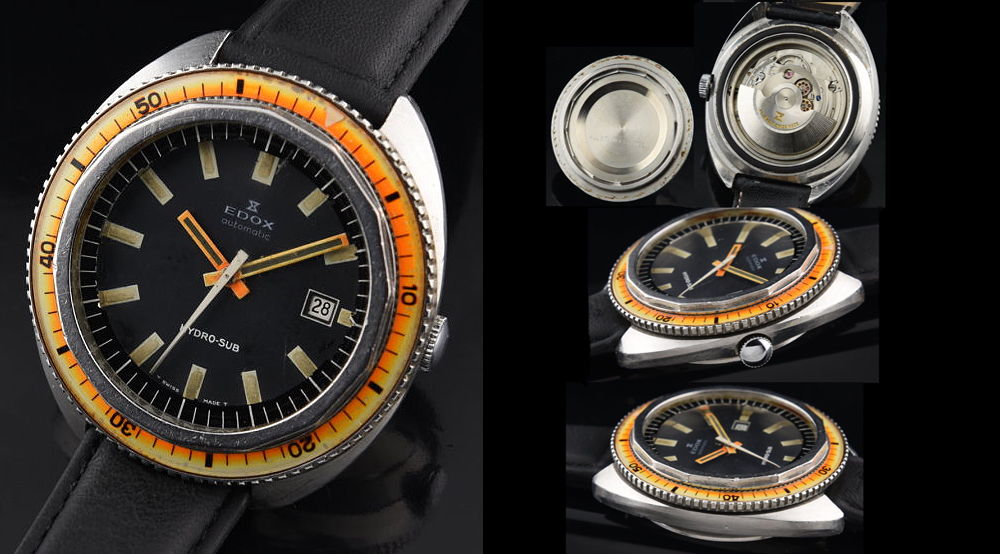
The model line also included a range of dedicated diver’s watches with “Hydro-Sub” branding, which now command a significant premium over the regular models. First introduced in 1965, their crowns featured a “tension ring and shock absorbing gasket system”, increasing their water resistance to 500m (the water resistance on all standard Delfin models was 200m.)
I’ll admit that I knew very little about Edox watches until a customer sent in a couple of Delfin models of a similar vintage for servicing. I was impressed by the robust qualities of the watches overall and since then I’ve been keeping a casual eye out for potential restoration candidates, the subject of this post being the first. There are usually quite a few for sale on everyone’s favourite auction site and prices are generally low for the quality on offer.
At first glance they could quite easily be overlooked as ‘just another dress watch’, but closer scrutiny reveals more about their credentials, the first clue being the thick diver’s crystal that protrudes significantly above the case.
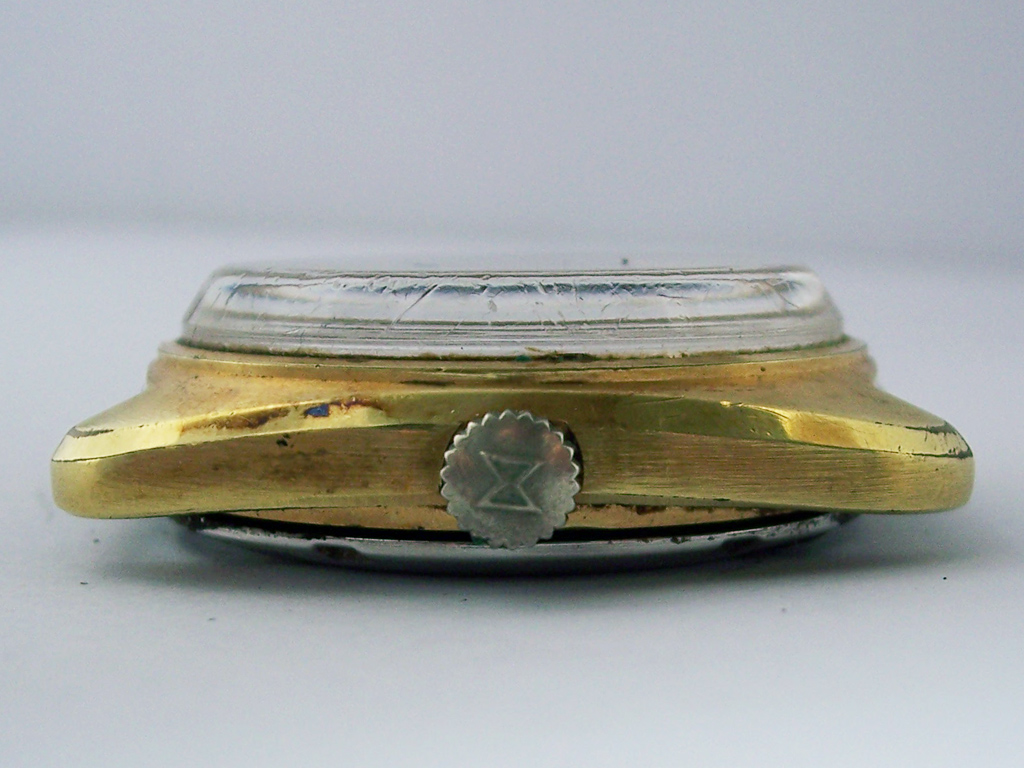
The branded crown is oversized too, as you’d probably expect housing two gaskets, though it isn’t screw-down (and isn’t on the automatic version either).
The case here is 36mm in diameter (excluding the crown) and rather than being gold plated as you may expect, it is “gold filled”, the difference being quite significant.

Last year I wrote about a Breitling TransOcean Automatic, explaining how gold capped watches relate to gold plated watches (that post here.) Gold filled watches sit somewhere between the two – Ashley Budgen wrote this article on subject earlier this year, highlighting the difference between all the case types.
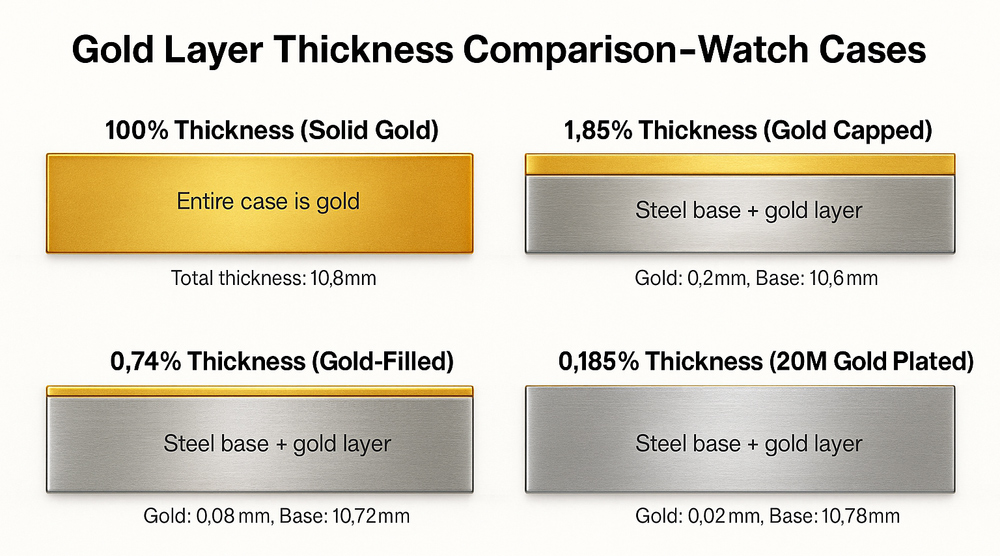
The two images on the bottom row represent the difference between gold filled (also known as rolled gold) and gold plated cases. You can see that gold filling is significantly thicker than gold plating and in the case of the Edox in this post, the coating is thicker than the 0.08 mm represented in the image too, the “G10” in the case marking above denoting a thickness of 0.10 mm (100 microns).
Turning the watch over, the caseback is decorated with the Edox hourglass and a stylised dolphin. As you can see, the watch arrived in filthy condition, having obviously been worn on a fabric strap for quite some time, though that did make photographing the caseback somewhat easier – a ‘brass rubbing of grime’ you could say… yikes!

Removing the caseback reveals a dedicated cover to protect the movement further from any dirt or moisture ingress and inside is an A.Schild cal. 1950/51, a time only, 17 jewel manually wound calibre with a beat rate of 21,600 bph.

The movement needed no more than a routine service this time to bring it back to its best. As you may have spotted above, the caseback gasket had emulsified into the dreaded ‘black slime’ that I’ve encountered many times now, so that needed to be addressed before the case could be thoroughly cleaned, the crystal polished and the watch rebuilt to finish the job.

Rich.
thank you, that’s really interesting. I have an Edox quartz watch that my parents gave me in 2000 to celebrate the birth of my eldest son (their first grandchild). It’s great to read more about the brand.