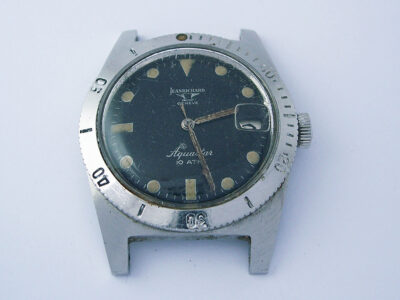
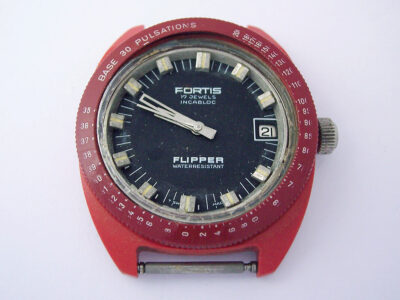
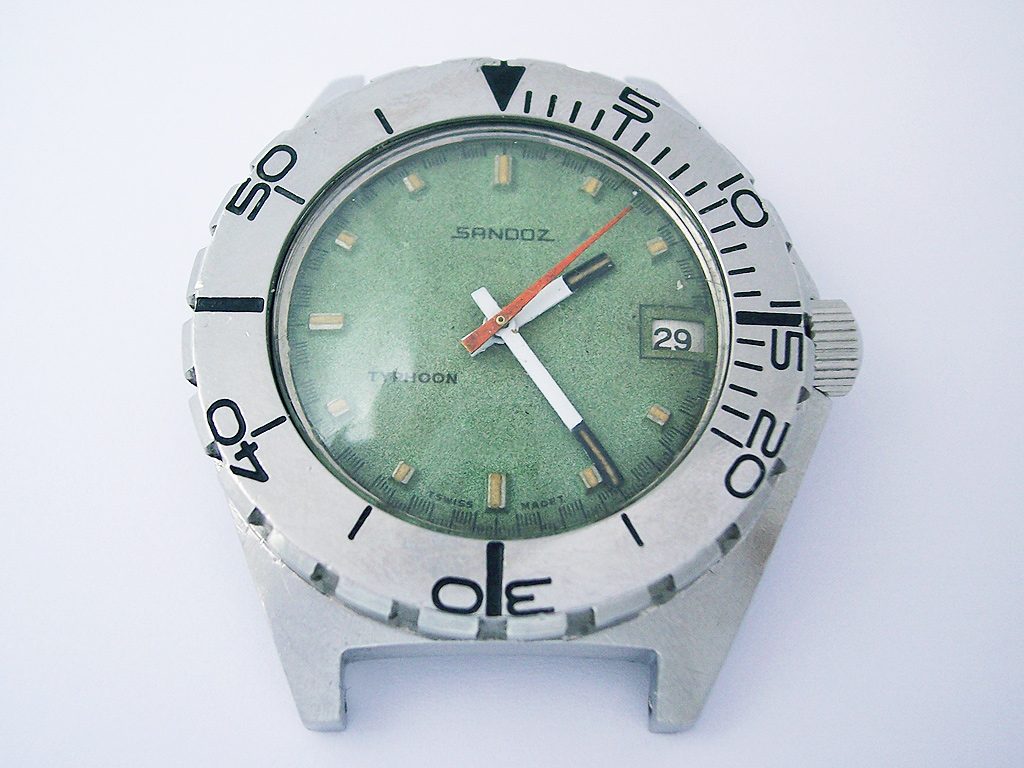
It’s always good to feature a new brand on the blog, so let’s have a look at this bruiser of a watch, the Sandoz Typhoon 1000m.
(Click pictures to enlarge)
Sandoz’s watchmaking business dates back to 1870, when Henri and Jules E. Sandoz, established the family’s first factory at La Chaux-de-Fonds, under the name Henri Sandoz & Cie. In 1890 the company expanded into the Jura by establishing the Tavannes Watch Co., which became a major industrial manufacturer and produced watches under several names including Sandoz, Tavannes and Cyma.
After Henri’s death in 1913, the Sandoz businesses continued to expand, developing wristwatches and specialised products during the interwar period. During the 1930s the company’s movements won major recognition at the Neuchâtel Observatory, while the wider Tavannes organisation had become one of Switzerland’s largest watch manufacturers.
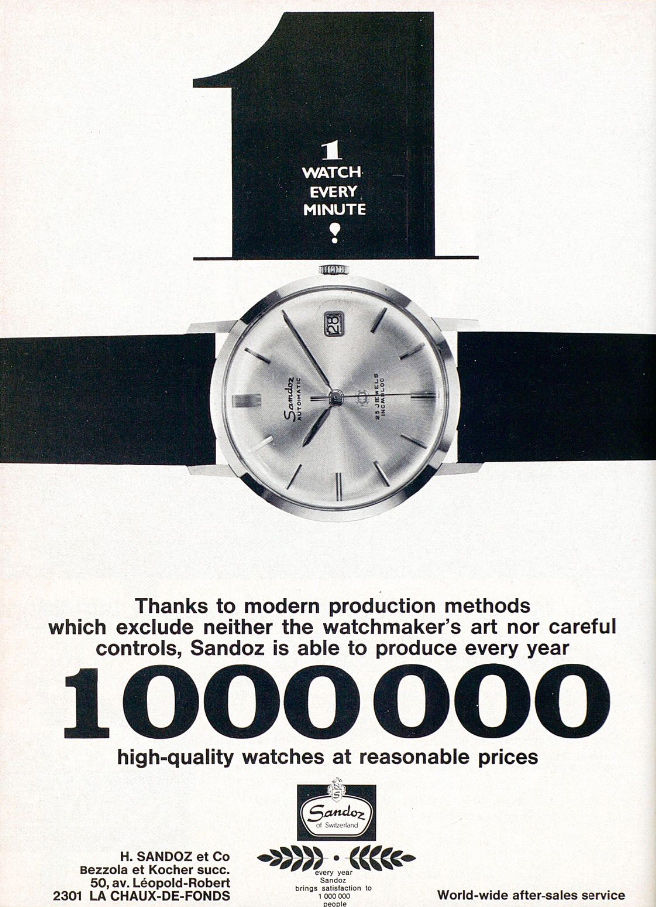
By the late 1960’s output was running at 1 million watches per year, so given the long history and prolific output, that the Sandoz brand isn’t more popular in the watch collecting community is surprising.
The Typhoon was first introduced in 1969 and was one of only a handful of watches boasting a water resistance rating of 1000m – another being the Nivada Grenchen Depthmaster 1000, which I’ve written about before on the blog (that post here, which also shows a few more members of the 1000m club).
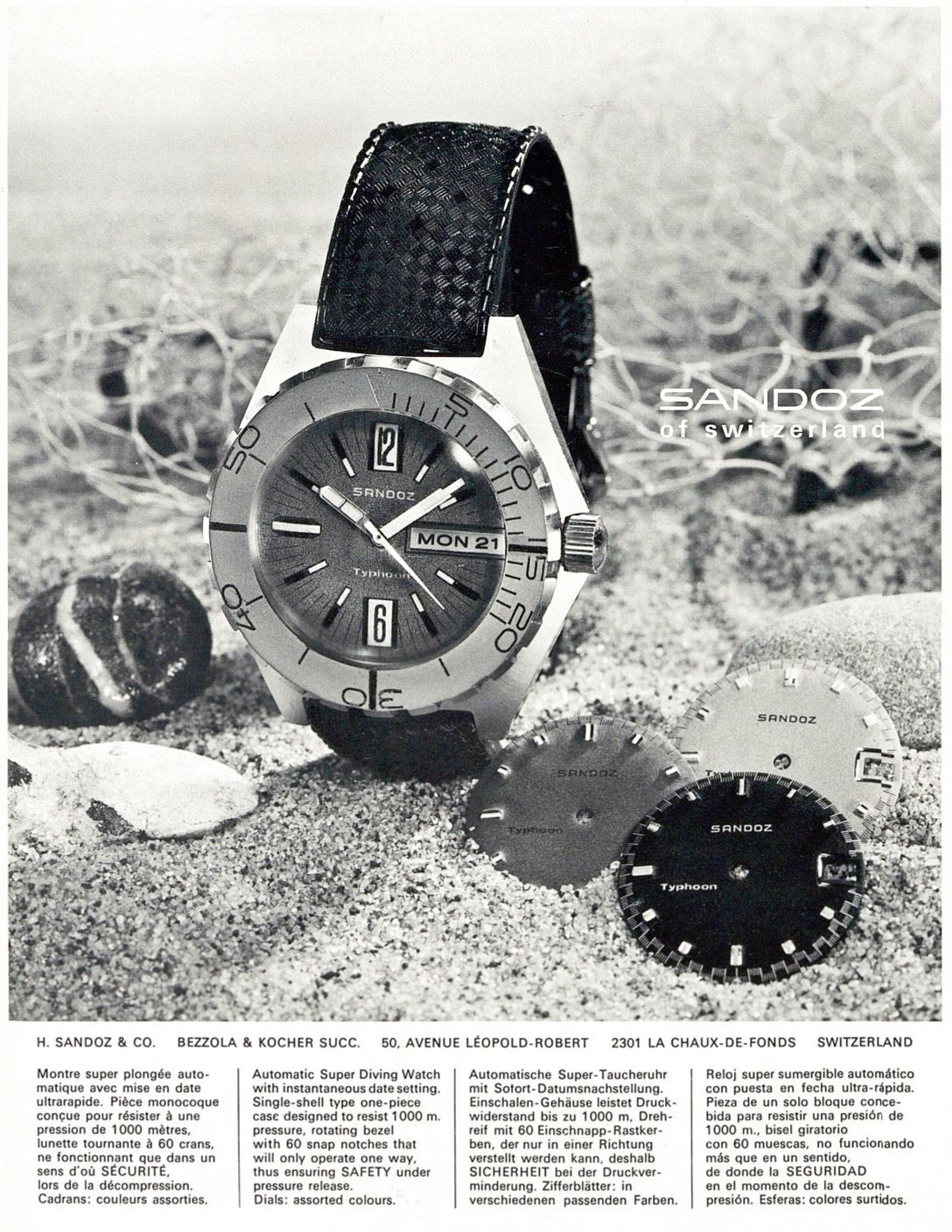
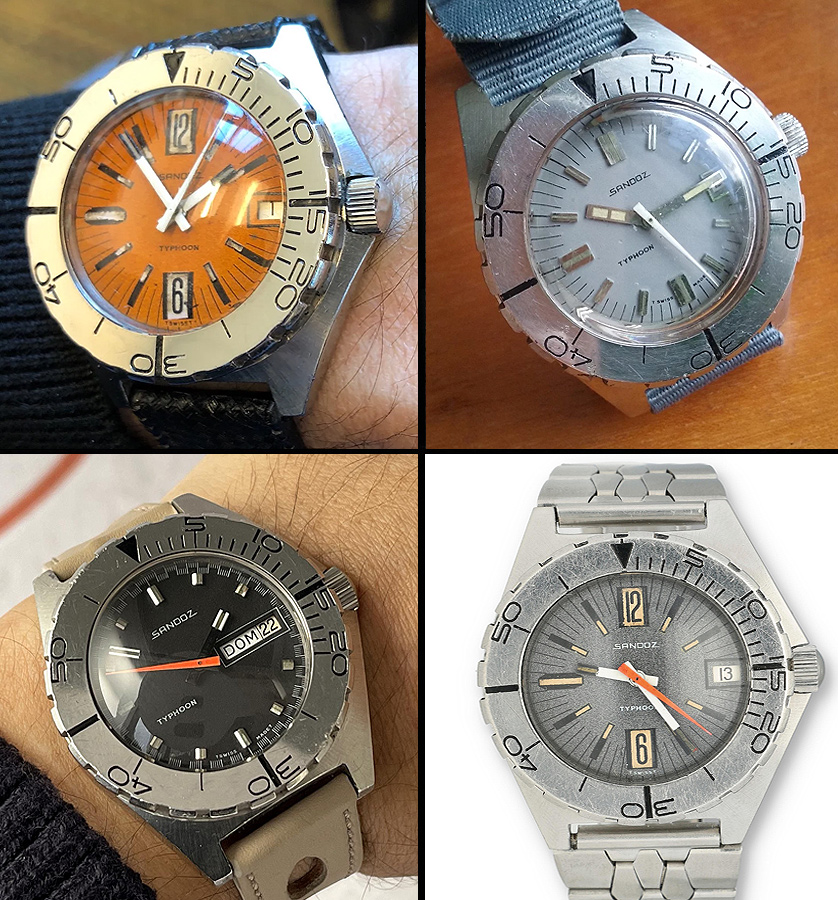
Thought to have had a production run of just 1000 units, the Typhoon was available in a number of dial colours and variations, available with date only or day/date calendars.
In order to achieve a 1000m rating, as you’d imagine, the Typhoon case is pretty substantial, so let’s have a closer look at its construction.
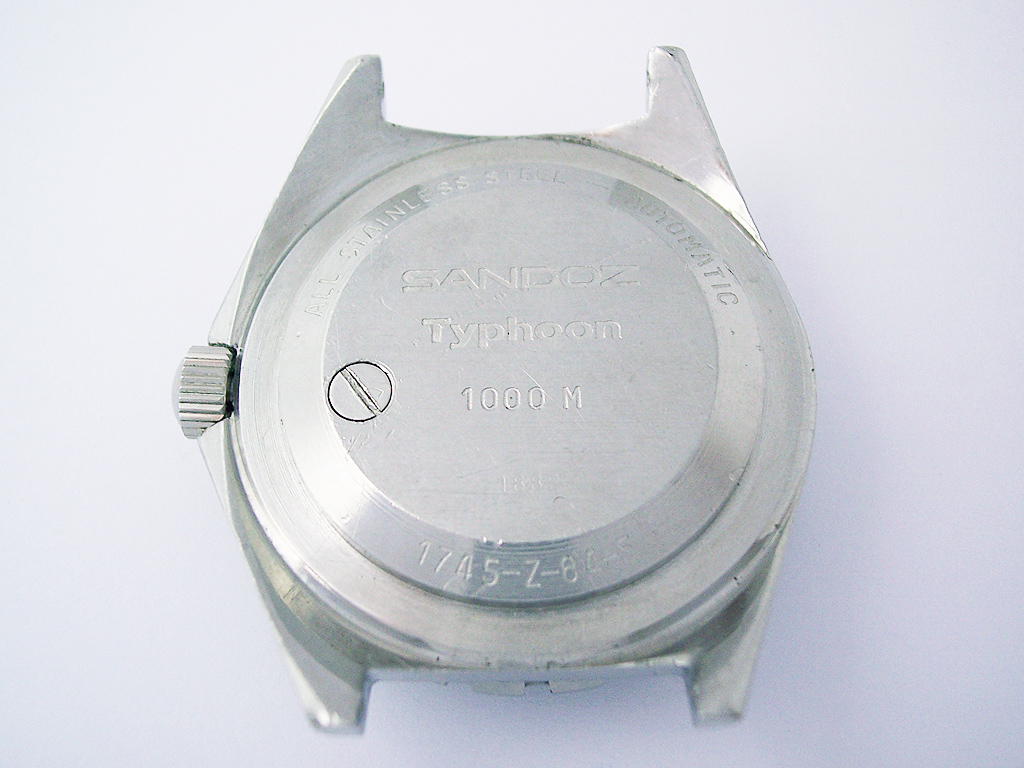
The first thing to note is that the watch is a monocoque design, immediately removing one potential point of failure, a separate caseback. Turning the watch over reveals a mysterious off-centre screw, but more on that later.
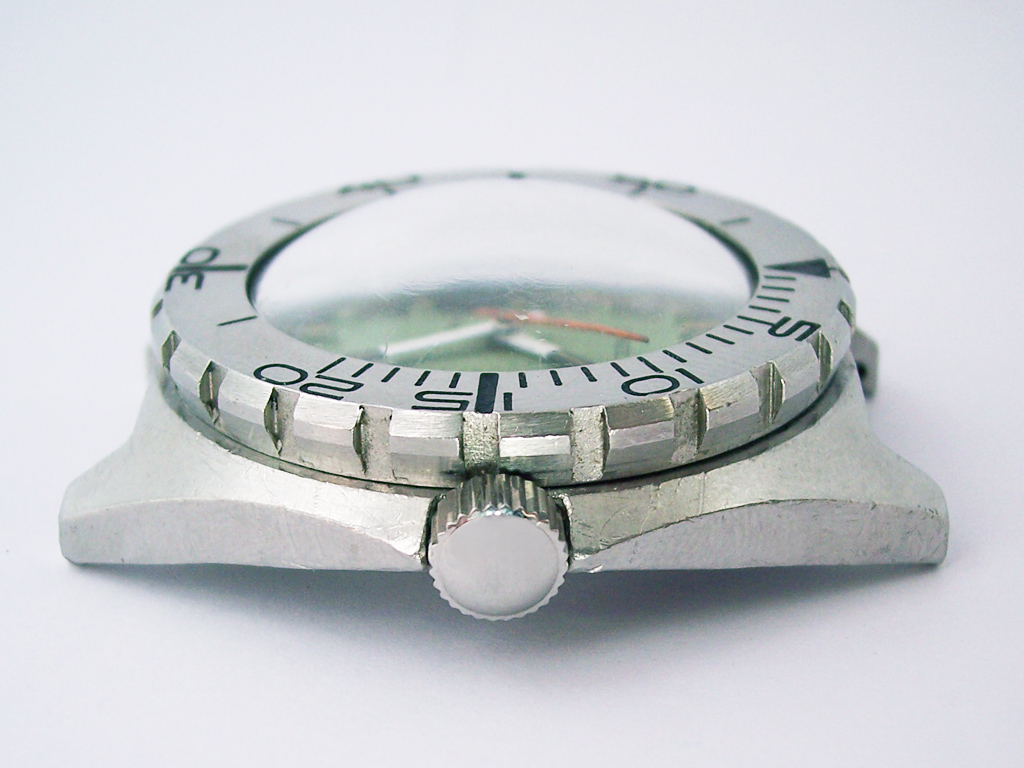
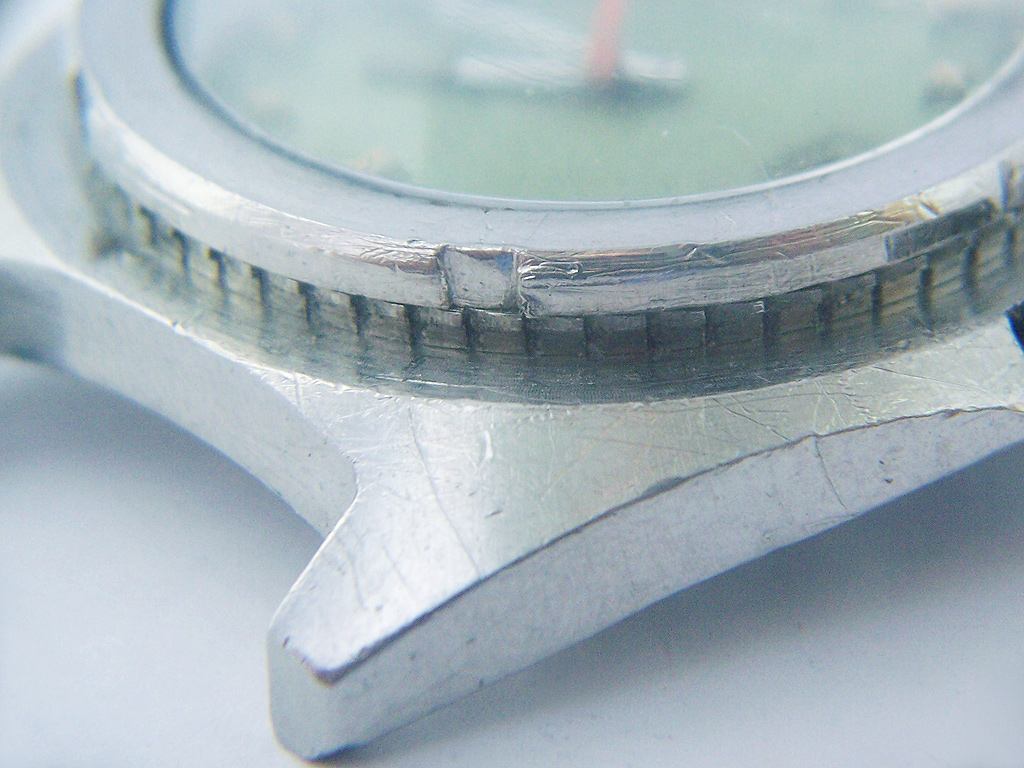
The second notable feature is best viewed from the side profile, the crystal, which is a serious piece of domed acrylic designed to withstand extreme pressure. The crown is screw-down too, as you would probably expect on a 1000m dive watch.
In terms of gaining access to the movement, there are various steps involved, the first is releasing the winding stem, which means removing the afore-mentioned screw on the rear of the case. Most watches with a monocoque case design have a two-piece winding stem which needs to be split, but that isn’t the case here.
Removing said screw reveals a stem release buried deep inside the case, which needs to be pressed down with a thin steel rod or fine tweezers.
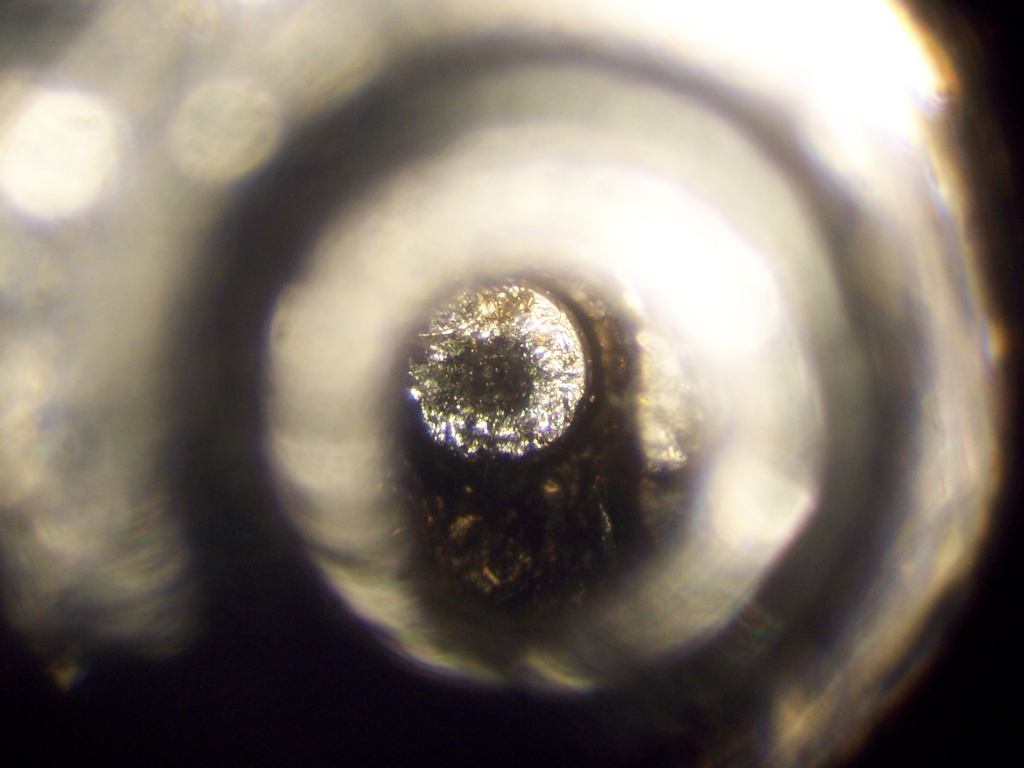
The next step is to lever off the bezel, revealing a slotted outer ring, which is best removed using a bench press.
After that ring is removed there are several more components, all stacked on top of each other before you finally gain access to the movement.
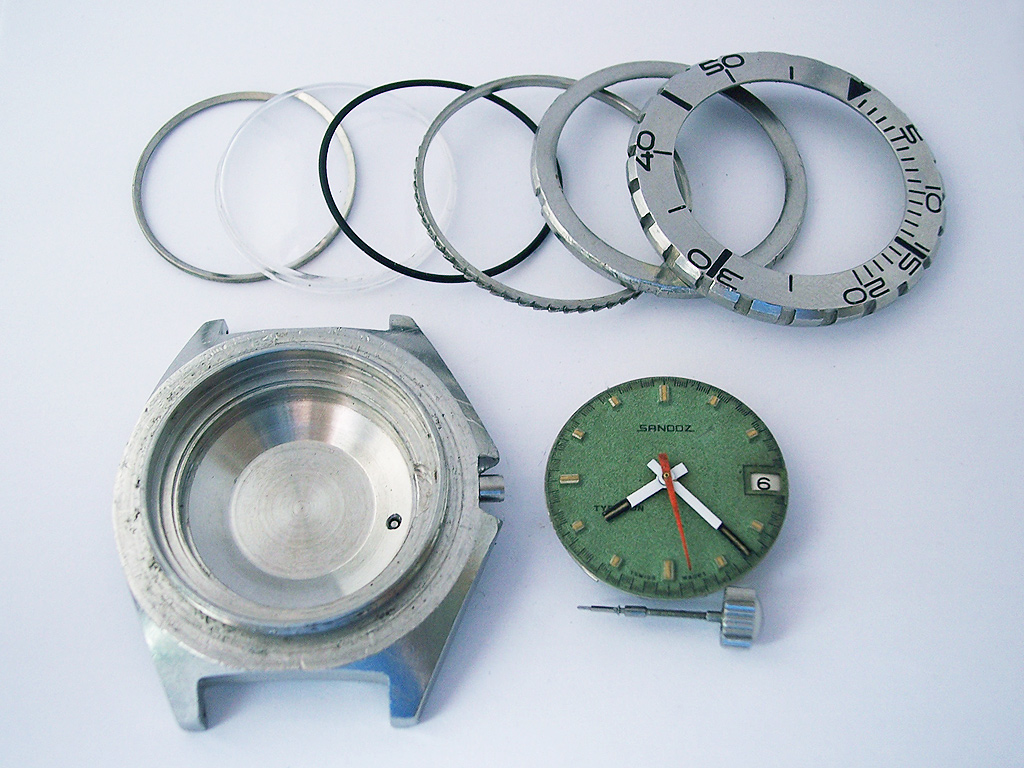
The movement was something of a surprise as watches from this period are typically powered by either A. Schild or ETA calibres, but inside this model is a Fontainemelon (FHF) Cal. 90-5; a 25 jewel automatic, with a beat rate of 21,600 bph and a date quickset via the crown.
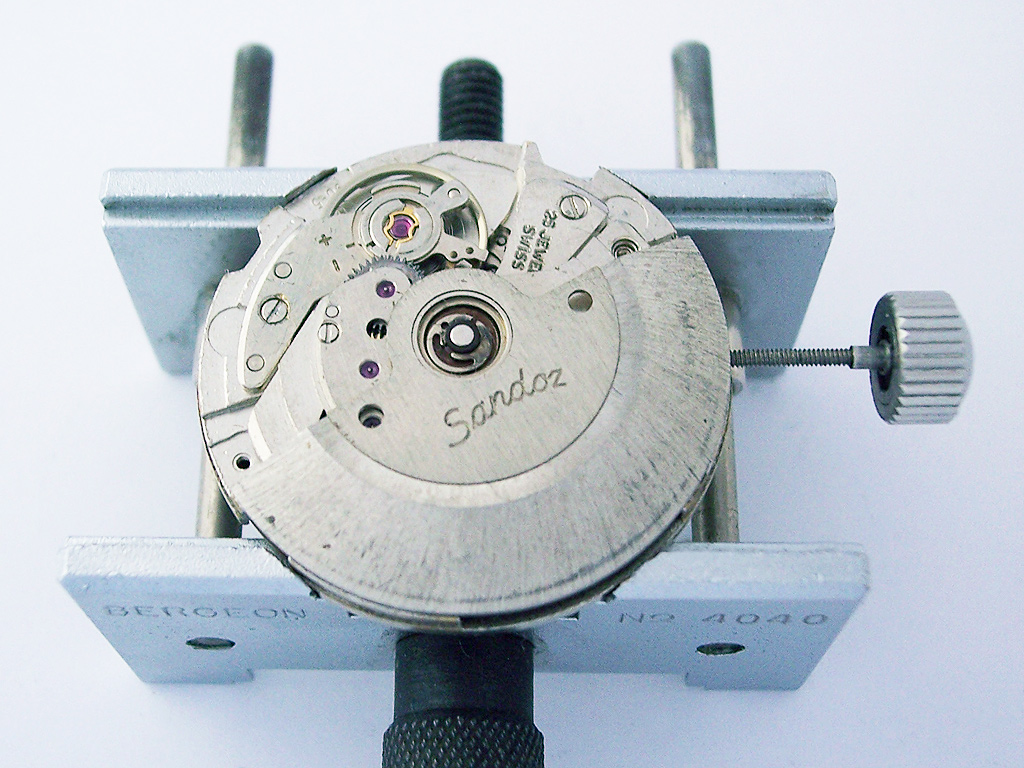
Once inside the case, everything went smoothly with the watch just needing a routine movement service and a case clean, but the “fun” began when trying to re-case the watch.
The quickset arrangement on this calibre is unusual as it’s implemented using a secondary gear on the winding stem, which moves the date forward when the stem is pulled out to the second position.
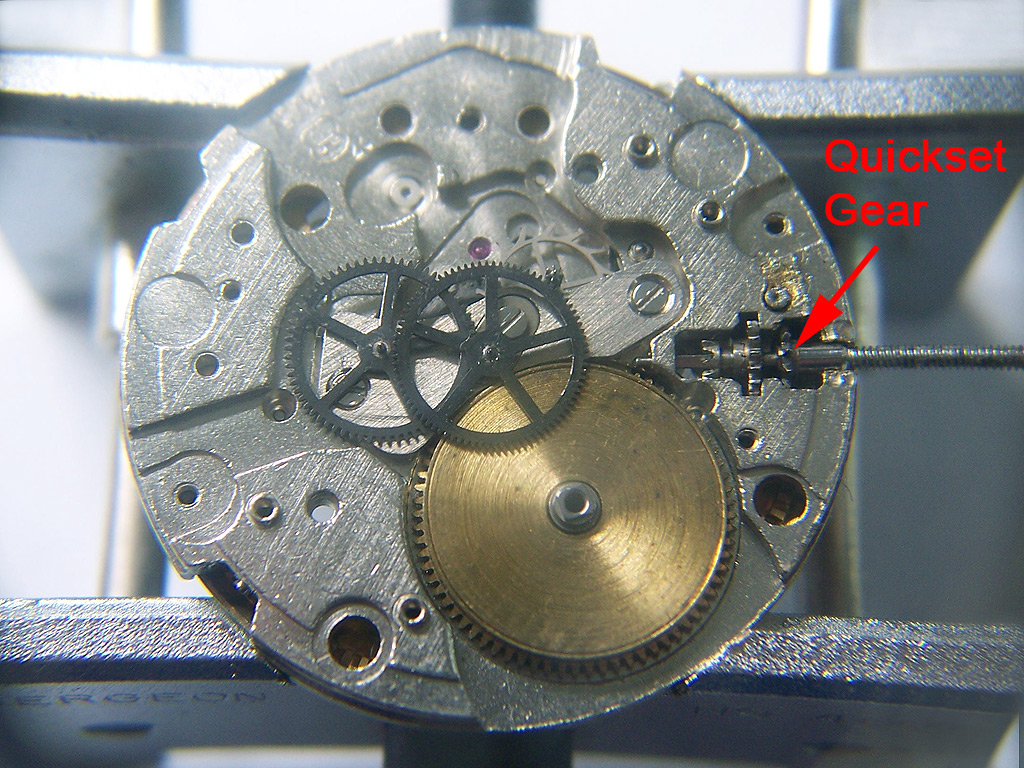
As you can see above, the secondary gear just sits in a slot in the movement, which is all well and good when the movement is face down, but turn it over, as you need to do to put this watch back into the monocoque case and it simply falls out before you can insert the stem, meaning the only option is to case the watch upside down.
Sandoz may have had a tool or jig for dealing with these watches, but I don’t, so after much ‘faffing about’ (technical watchmaking term there!) in order to protect the delicate dial and hands, I finally got the watch back into the case to finish the job.
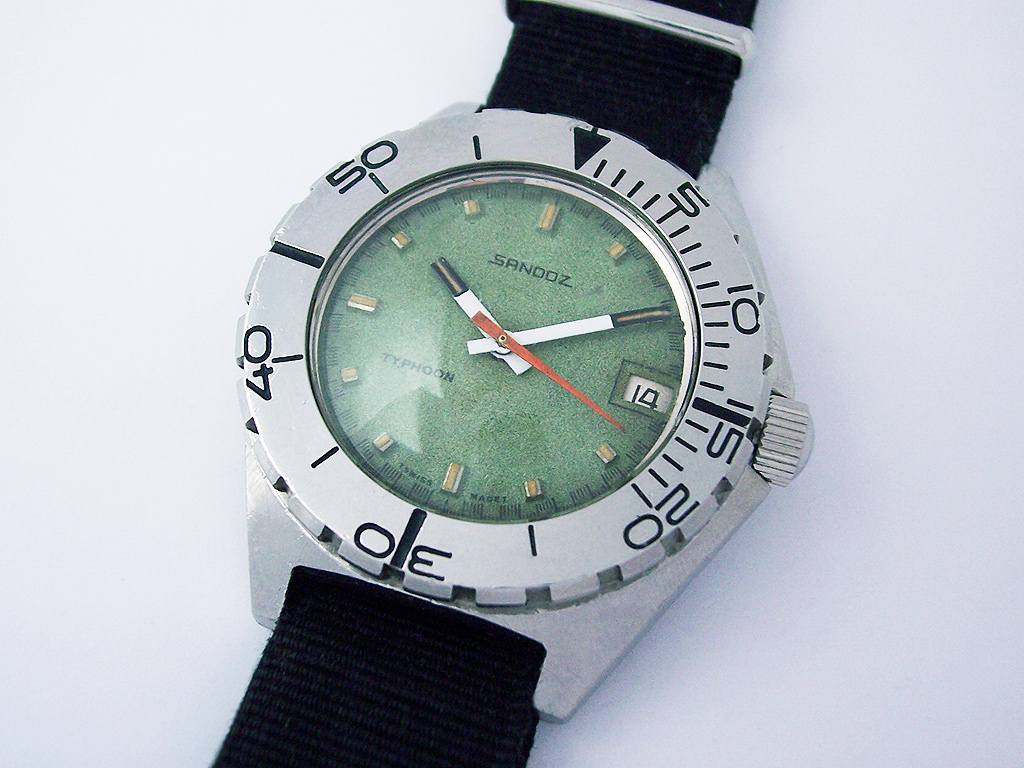
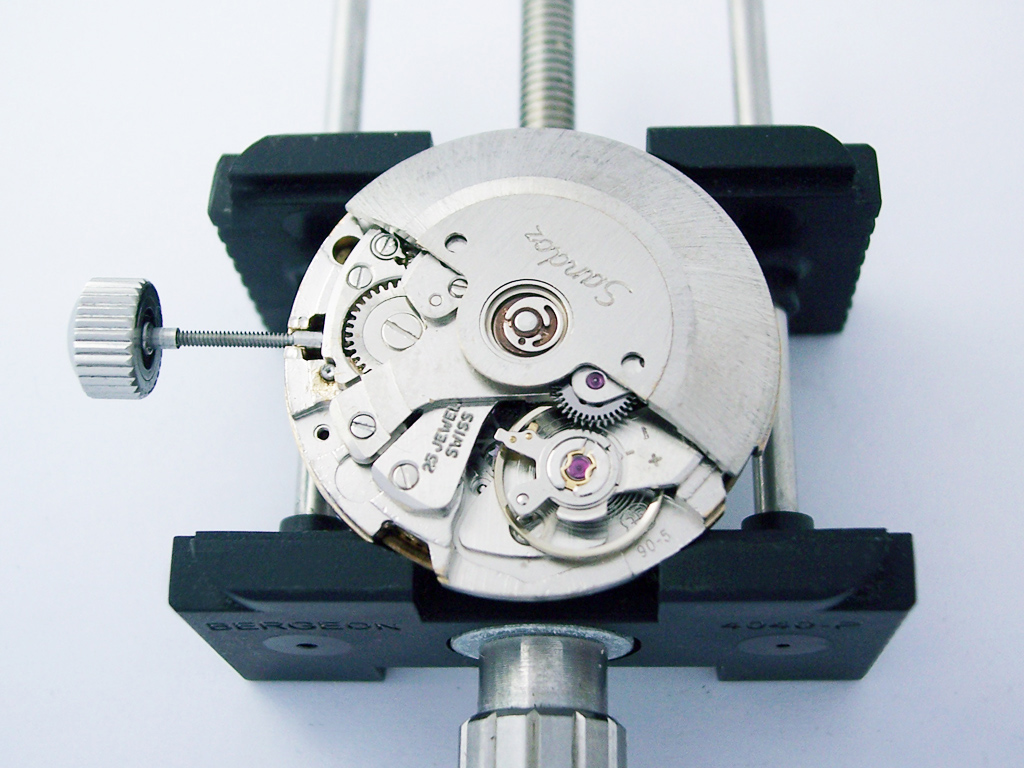
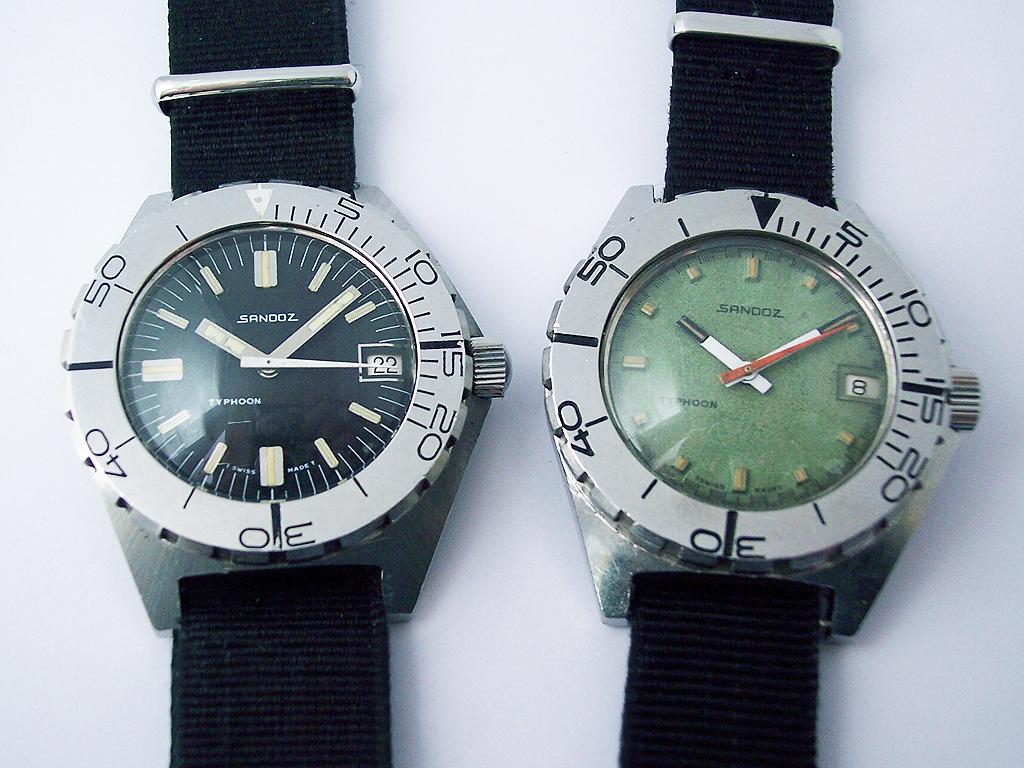
The owner of this watch also sent in a black dialled version of the watch for a new crystal gasket at the same time, so here is a picture of the two Typhoons together.
Rich.
** Many thanks to Justin Swale for letting me feature his watches on the blog. **